This year, every trip I’ve taken has involved flight delays. Like many travelers, I hate flight delays. Somehow, through some combination of airline customer service and long late night drives with my wife, each of those trips still happened. I still made memories with friends, took pictures of landscapes that no camera could do justice, and, of course, lost my luggage on the way back.
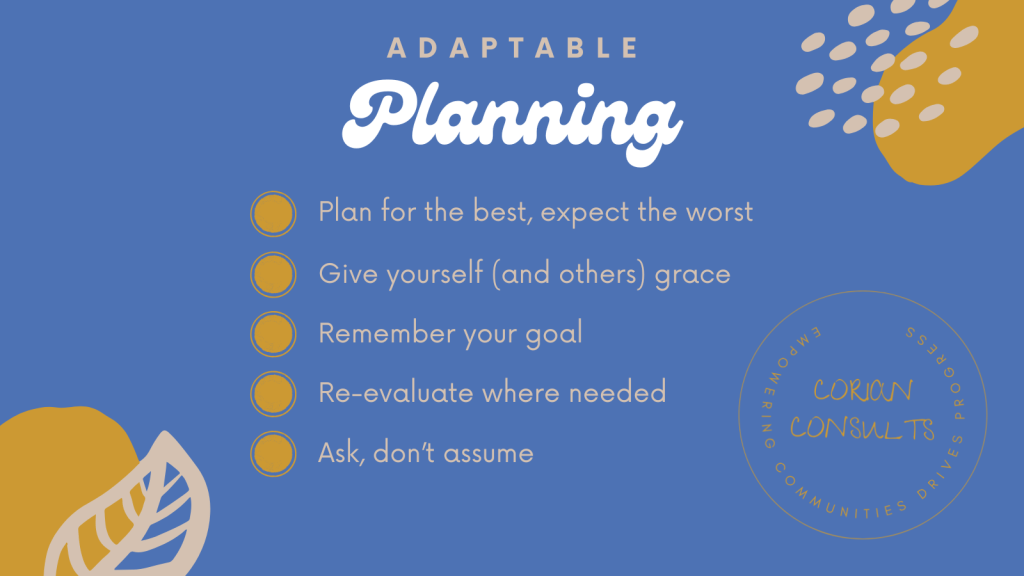
Reflecting on those experiences, I identified five skills that helped me stay grounded while rolling through those delays. Or, as grounded as anyone can be when catching their breath after running across the airport.
- Hope for the best, expect the worst.
Whenever something goes wrong, it’s not about how much planning we’ve done, it’s about whether our plan works. Spending all the time in the world on a plan doesn’t mean it will succeed. Sometimes, the best decisions are made on a timeline. When faced with a disruption, we can either trust ourselves or follow the plan to the letter. Knowing we will face that moment at some point, sooner or later, one of the best things we can do is set ourselves up to make good decisions in the moment. By scenario planning, inviting disagreement, and good communication in the moment help think creatively about possible issues before they arise. The key is focusing on what is within our control and how we can respond.
- Give yourself (and others) grace
In most projects, there comes a day where “something happens.” Building extra time into the schedule is a way to acknowledge that we are all human. When delays do occur, it can feel empowering to know that the plan accounted for that situation. Additionally, having a solid plan laid out allows us to focus on being responsive to our needs and the needs of those around us.
- Remember your goal
Setting intermittent goals helps create actionable steps to approach a larger problem. Still, in working diligently to achieve one step after another, it is all too easy to lose track of the big picture. In last month’s post Making Self-Care Your Superpower, we explored a strategy for embracing authenticity as a safeguard against burnout. The same principle can help with individual projects. Documenting initial feelings of enthusiasm about a project and the reasons for undertaking it offers a resource for staying focused on your vision.
- Re-evaluate where needed
In a world with vastly more information than we could ever process available, making a choice is often the hard part. Once we decide on a path forward, we can evaluate whether that approach was the best one. The book “Fail Fast, Fail Often,” encourages a growth mindset that helps us improve over time. By viewing failure as a learning opportunity, we can overcome the shame mistakes bring with them. Adaptability and flexibility are key characteristics for this strategy. Through remaining open to new ideas, plans, and outcomes, we can achieve an outcome even stronger than the one we dreamed initially.
- Ask, don’t assume
COVID-19 exposed numerous sides of society that previously hid behind the walls of homes. Parents became elementary school teachers; living rooms became corporate home offices; and everyone risked falling into illness, with some facing permanent disability. Amid the confusion and chaos of grocery shortages, healthcare limitations, and travel restrictions, society earned a glimpse into the whole picture of their colleagues’ lives. An incalculable amount changed in the last five years, but John Daley narrowed it down to five in an article for NPR reflecting on those changes. Critically, he concludes with a reminder that long COVID is a real and ongoing crisis for many people. Asking what others need during times when conflict arises can make all the difference.
Conclusion: Flexibility is planning
Building flexibility into strategic plans helps set realistic expectations for projects. At the end of the day, mistakes and delays are an important part of the learning process. As humans, we often need to adjust our work schedules to accommodate for life. Acknowledging the inevitability of change helps create stronger plans along with stronger teams.
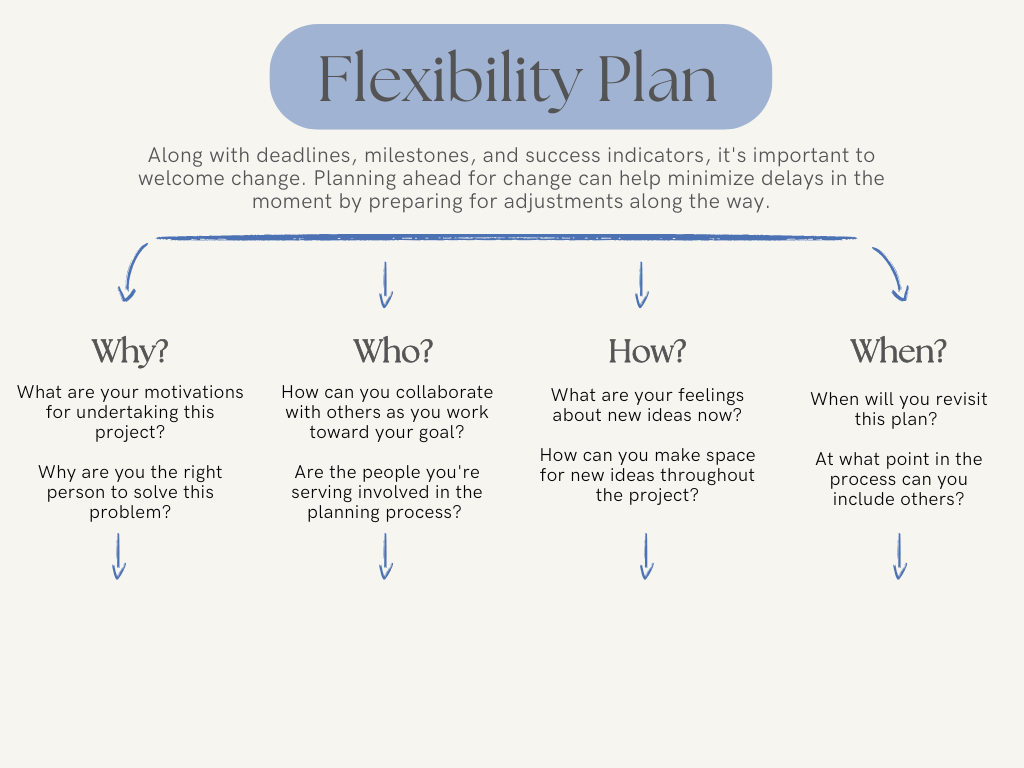
Check out this worksheet and try for yourself. ⤵️
 Corian Consults, LLC
Leave a comment